Live airbrushing gives sports fans something to watch and something personal to take home. For a stadium hospitality event, alumni tailgate or sponsor fan zone, the challenge is serving a concentrated crowd before people move on.
Build the plan around a defined number of items, an approved design menu and a realistic completion deadline. A crowd of 2,000 does not mean 2,000 pieces can be customized during a short pregame window.
What do real sports activations look like?
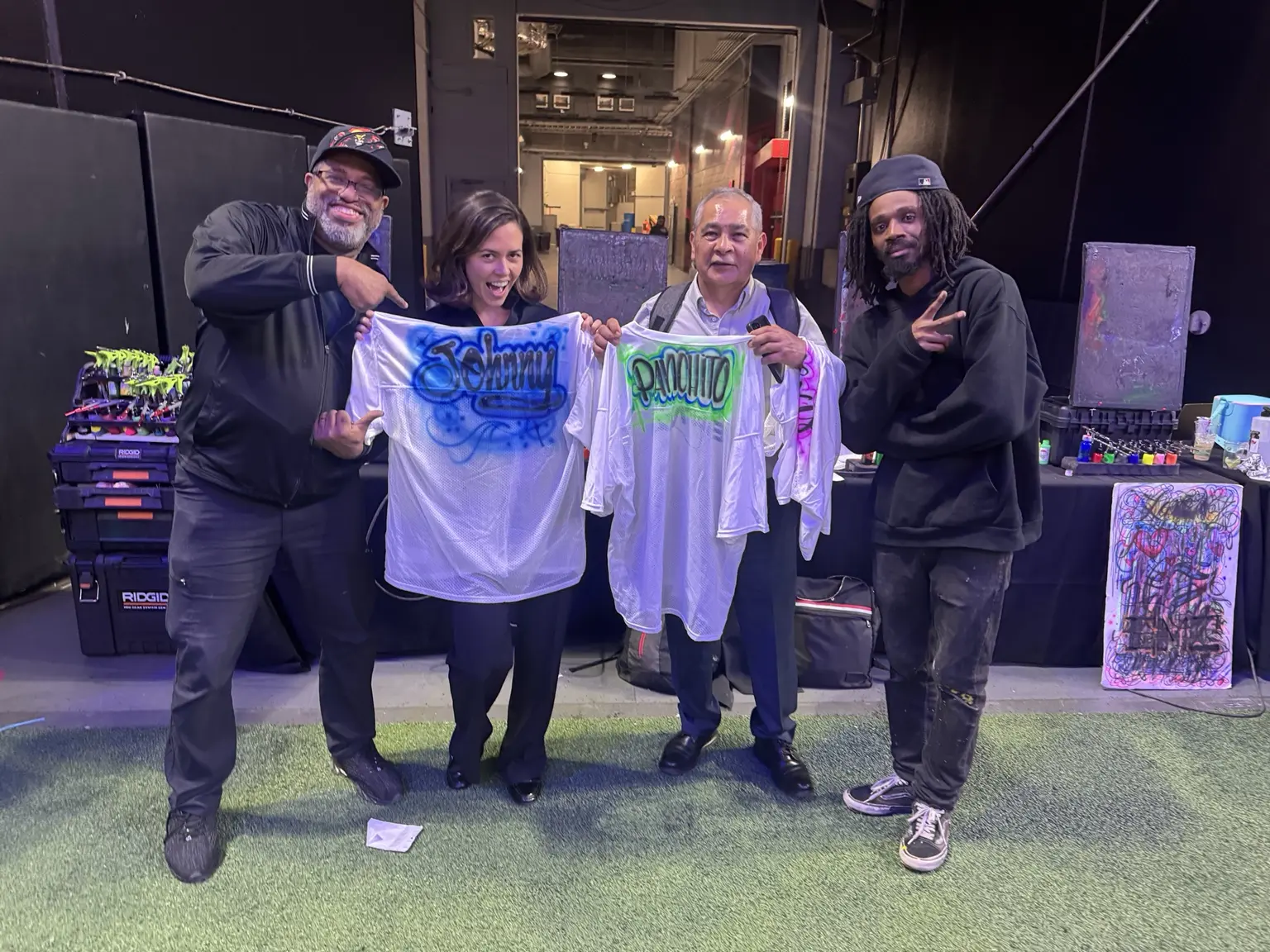
At an Atlanta Falcons event at Mercedes-Benz Stadium, 3JS artists personalized football jerseys with colorful names and lettering. The large fabric surface made each guest’s name a prominent part of the finished piece.
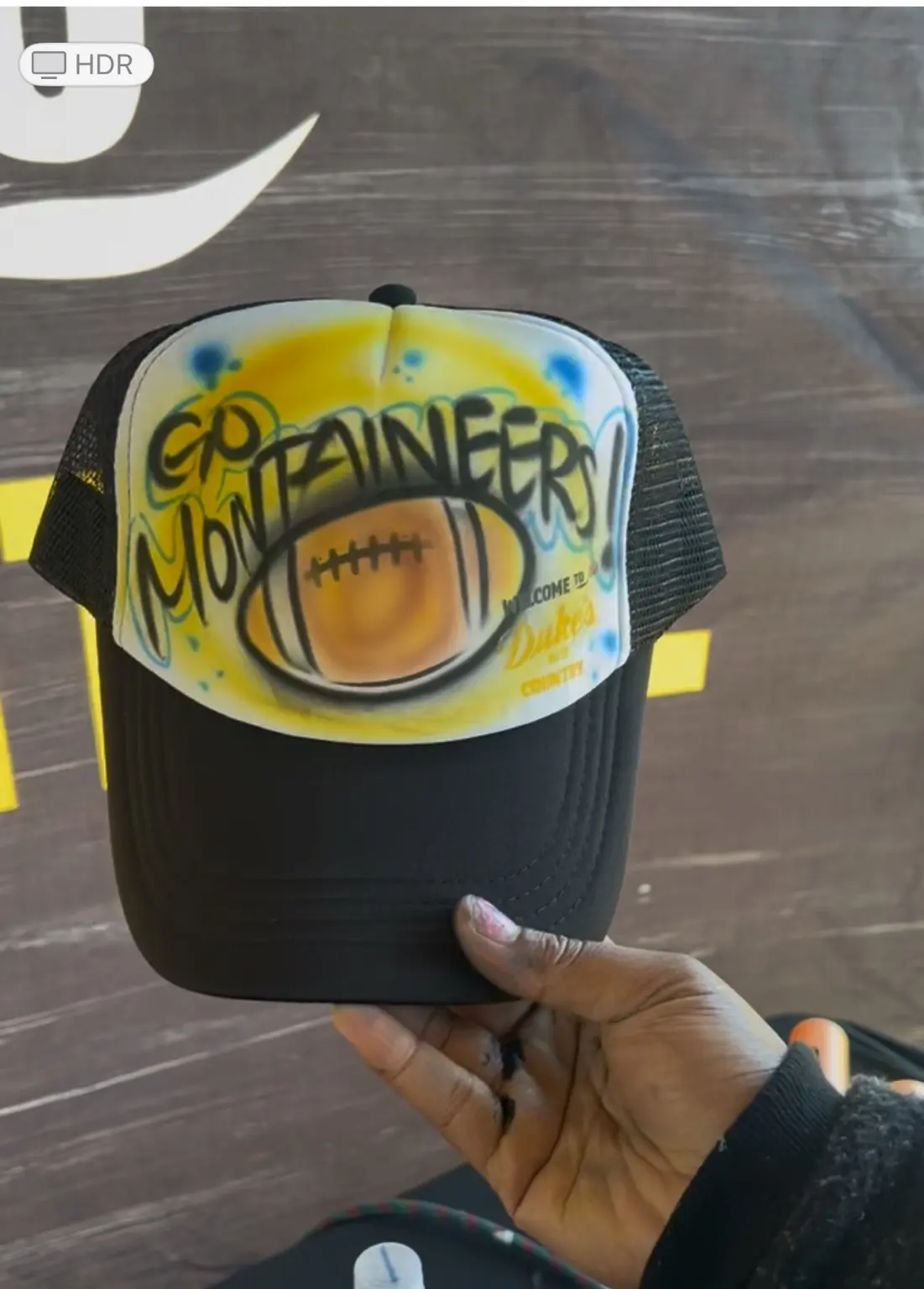
At a West Virginia–Colorado university football event, a custom trucker hat combined “Go Mountaineers” lettering, a football motif and gold-and-blue color. These are two different merchandise approaches: an apparel keepsake with a large painting area and an adjustable hat built around a focused fan design.
The photos document those events; the staffing and timeline examples below are planning illustrations, not reported results from either activation.
1. Define who receives merchandise
Choose a target: all hospitality guests, the first set number of participants, invited alumni or a specific sponsor audience. If items are limited, make that clear before guests join the line. Decide whether the limit is one item per person and how repeat requests will be handled.
Track completed pieces and remaining blanks during the activation. If your goal is sponsor engagement, count meaningful conversations separately from painted items; a custom hat count is not automatically a count of qualified leads.
2. Choose a product that fits the time and crowd
| Product | Useful for | Plan around |
|---|---|---|
| Trucker hats | Names, team-color designs and wearable fan photos | Front-panel area, fit and blank inventory |
| Jerseys or T-shirts | Larger lettering and apparel-focused experiences | Size distribution, fabric tests and an organized pickup rack |
| Pennants | School spirit and display keepsakes | Artwork area, handling and a flat work surface |
| Canvas bags | A non-apparel option | Carrying convenience and venue item policies |
Browse available products and live custom trucker hats. Ask the venue whether the proposed finished item can enter the stadium and whether it needs a separate collection plan. Do not assume that a giveaway bag or an oversized item will be accepted.
3. Calculate artists from productive painting time
Use approximately 25 standard items per artist per hour as a starting estimate. Confirm that estimate against the actual product and artwork; a detailed jersey design may not move at the same pace as simple hat lettering.
3 artists × 2 productive hours × approximately 25 items = approximately 150 standard pieces.
If only 90 minutes remain for painting, the same team’s estimate falls to about 112 pieces. Four artists over 90 minutes would estimate 150 pieces, still without a capacity buffer.
Do not count equipment setup, a scheduled move or a required pause as painting time. For a guaranteed participation target, discuss additional capacity rather than planning exactly at the estimate. Compare options in the artist staffing guide.
4. Work backward from fans’ departure
Ask when guests must leave the activation area to walk, clear entry screening and reach their seats. Final pickup should fit that deadline. A station open until kickoff may not help someone whose gate is a long walk away.
For example, if guests need to leave at 1:30 PM, a two-hour painting window could run from 11:15 AM to 1:15 PM, with the remaining 15 minutes used for final collection and checks. That is an illustrative schedule, not a promised turnaround or fixed cutoff. The team should close new orders earlier whenever the accepted queue fills the remaining painting capacity.
Late arrivals need a clear answer: whether orders are closed, whether a different approved item is available or whether an organizer can collect completed work. Only offer after-game collection or shipping if it has been agreed in advance.
5. Approve team and sponsor artwork before game day
Set a short menu of names, lettering styles, colors and motifs. Confirm who approves team, league and sponsor marks and whether the organizer has authorization to use them. A sponsor placement may be prepared before the event, with live personalization kept in a separate area.
Test the exact blank and approve a sample. Decide how to handle extra logos, long phrases and unsuitable requests so artists do not have to negotiate the rules at each order. Review logo application options and guest design menus.
6. Coordinate venue access and weather protection
Give the artist lead the correct loading entrance, parking instructions, credential requirements and a venue contact. Confirm the work area, tables, chairs, power, lighting, floor protection and where merchandise can be stored. Keep ordering and collection away from exits, concessions and the main pedestrian route.
For an outdoor tailgate, agree on shelter, stable surfaces and a wind or rain contingency before arrival. A tent alone does not resolve every weather issue. Confirm power arrangements and compressor placement with the venue and artist team. Use the setup checklist and outdoor-event guide for the detailed discussion.
7. Make pickup easy before the crowd moves
Use a written name, item choice, apparel size where relevant and an order number. Separate ordering, painting and finished-item collection. Confirm spelling before painting, then give handling instructions at pickup so fresh surfaces are protected.
An organizer or production assistant can manage merchandise sizes and collection while artists paint. For more detail, see line management and drying and handling. If merchandise is traveling separately, confirm receiving arrangements through the shipping guide.
What should you send for a sports activation quote?
- Event date, venue, city and time zone
- Total attendance and the number of guests promised an item
- Doors, painting window, final pickup and guest departure times
- Product, sizes, inventory and who supplies the blanks
- Design samples, sponsor placement and artwork approval contact
- Indoor or outdoor location, power, loading access and weather plan
- Order management, credentials and a day-of venue contact
Explore corporate and sponsor activations, college event services and past event work, then use the quote form to build a plan around your actual fan window.
Frequently asked questions
How many fans can one airbrush artist serve?
Approximately 25 standard items per productive painting hour is an initial 3JS planning estimate. Artwork, product type and guest decisions affect output; review the exact design menu before confirming capacity.
Should airbrushing finish before kickoff?
If fans need their items before entering the stadium, plan completion and pickup before that departure point. Kickoff alone may be too late; allow for walking, screening and finding seats.
Can a sponsor logo be included on fan merchandise?
Discuss approved artwork, placement and production methods before ordering merchandise. The organizer should confirm authorization for team, league and sponsor marks and approve a sample.
Are jerseys or hats better for a fan activation?
Hats reduce apparel-size sorting and are easy to display. Jerseys offer a larger painting area but require size planning and artwork tests on the exact fabric. Choose around the guest experience and service window.
Can live airbrushing take place at an outdoor tailgate?
It can when venue approval, suitable power, stable work surfaces, weather protection and a workable contingency plan are confirmed. Review wind, rain, lighting, access and the compressor location with the artist team.