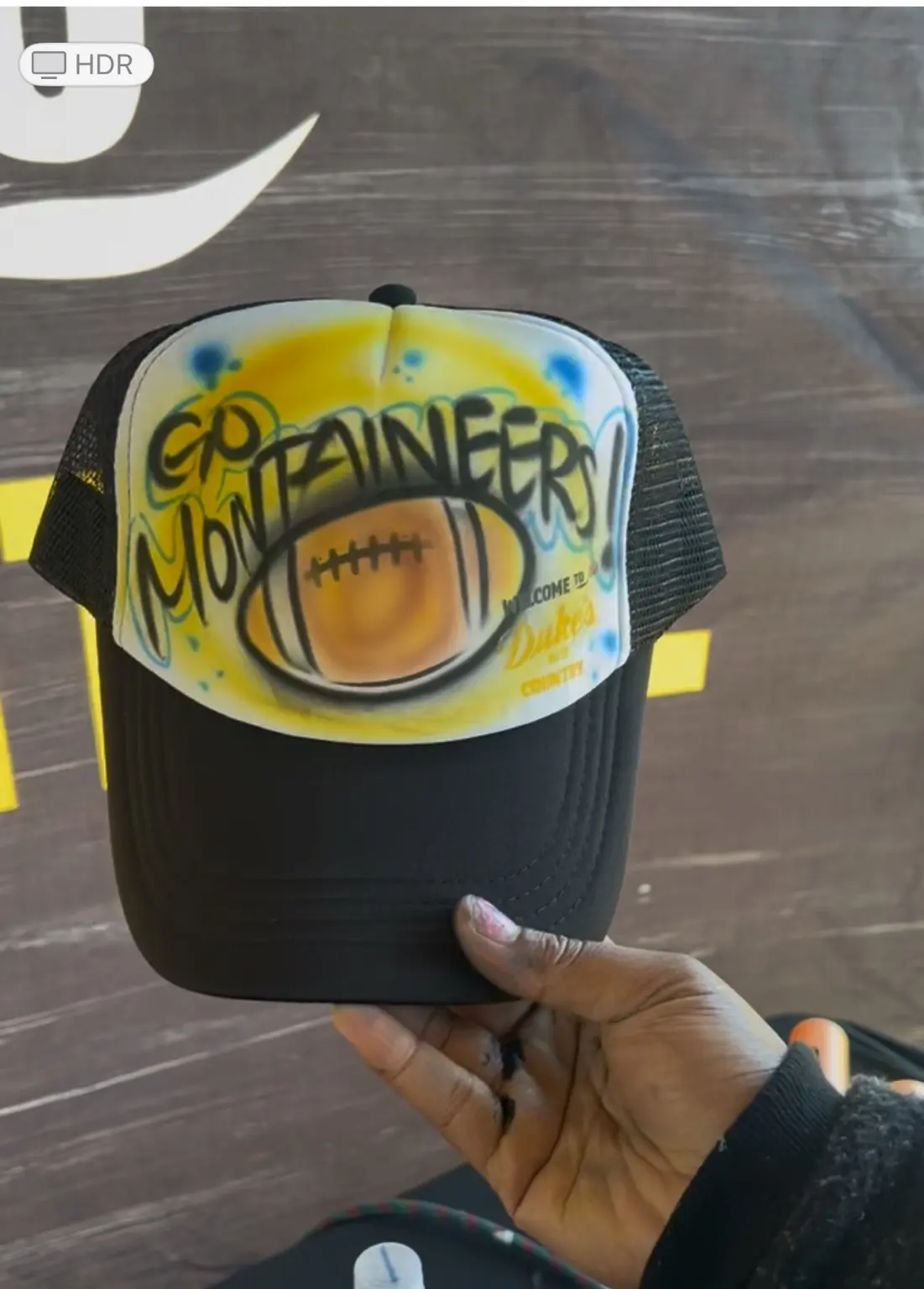
A live airbrush station should feel personal, but it does not need to be completely open-ended. Corporate and university planners usually get the best balance by approving a group of designs before the event and allowing guests to customize within those choices.
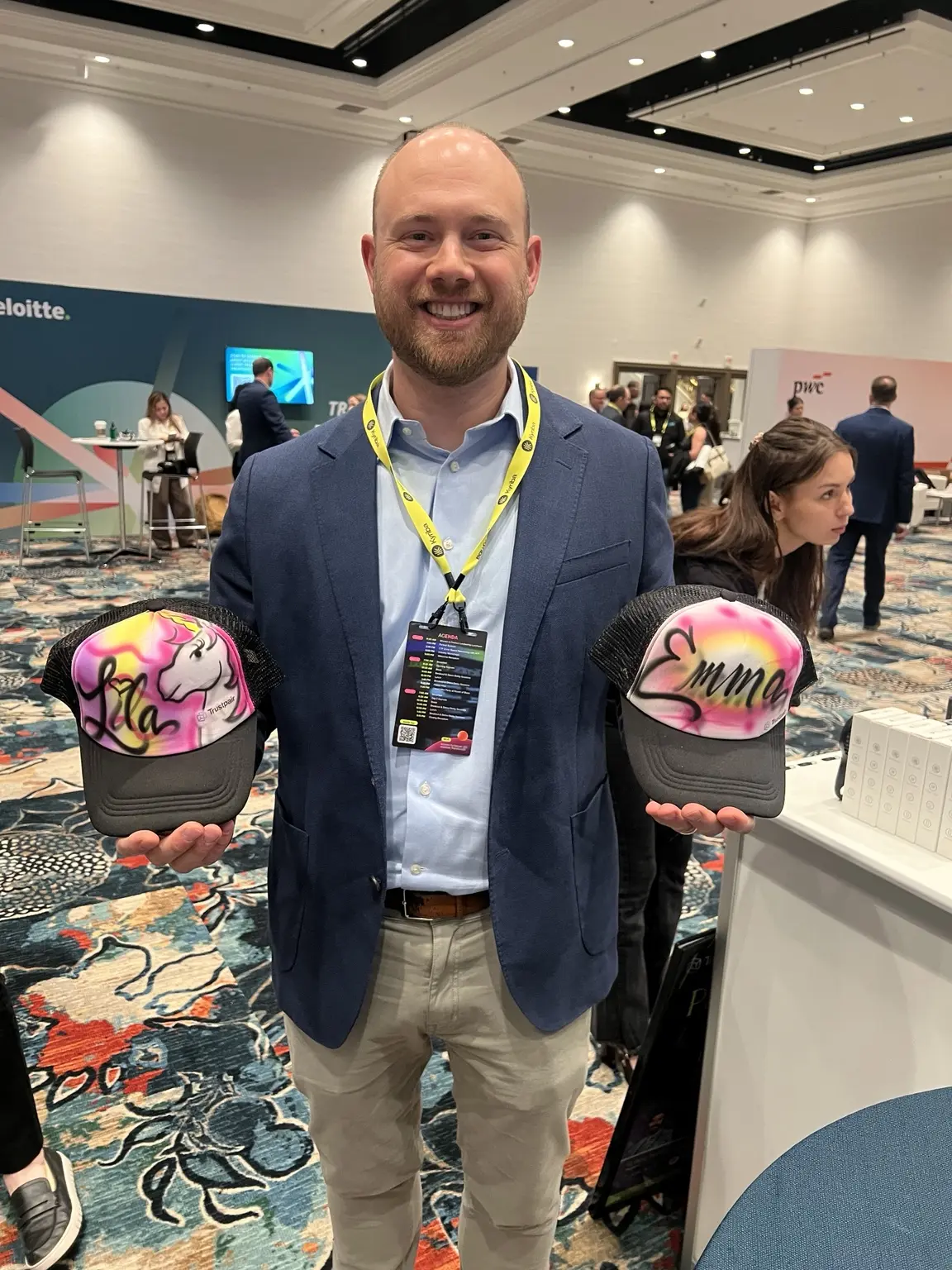
A guest might choose a trucker hat, pick one of several backgrounds, select event colors and add a name. The finished piece is unique without asking the artist to invent an entirely new composition for every person in line.
What choices can guests make?
- Merchandise: hat style, shirt, hoodie, tote bag, pennant or another approved item.
- Core design: one of the event's sample layouts, themes or icons.
- Colors: a limited palette based on the brand, school or event.
- Lettering: a name, initials, nickname or short approved word.
- Small details: stars, flames, hearts, team motifs or other approved accents.
The exact choices should match the product. A hat front may work well for a name and graphic, while a canvas tote offers more room. Compare products for live airbrush events and browse the available event merchandise.
Curated menu or fully open custom requests?
| Approach | Best for | Tradeoff |
|---|---|---|
| Curated design menu | Corporate activations, college events, trade shows and large crowds | Fewer choices, but faster decisions and more predictable output |
| Flexible menu with add-ons | Medium-size celebrations and employee events | More variety while retaining approved boundaries |
| Open custom requests | Smaller private events with more time per guest | Longest design and painting time; output is harder to forecast |
A curated menu does not make every item identical. Names, colors and hand-painted variations still make each piece personal. It simply removes choices that are off-brand, too complex or too slow for the service window.
How many designs should you offer?
For a busy event, 6 to 12 core choices is a practical starting point. A simple activation may offer fewer. A smaller event with a long service window may support more. The right number depends on artist count, guest volume, product, design complexity and how quickly guests must move through the station.
Display finished samples or a clear menu where guests can see it before ordering. Group choices into a short sequence: select the item, choose the design, choose the color and provide the name. This helps prevent the ordering conversation from becoming the bottleneck.
How do universities use guest choice?
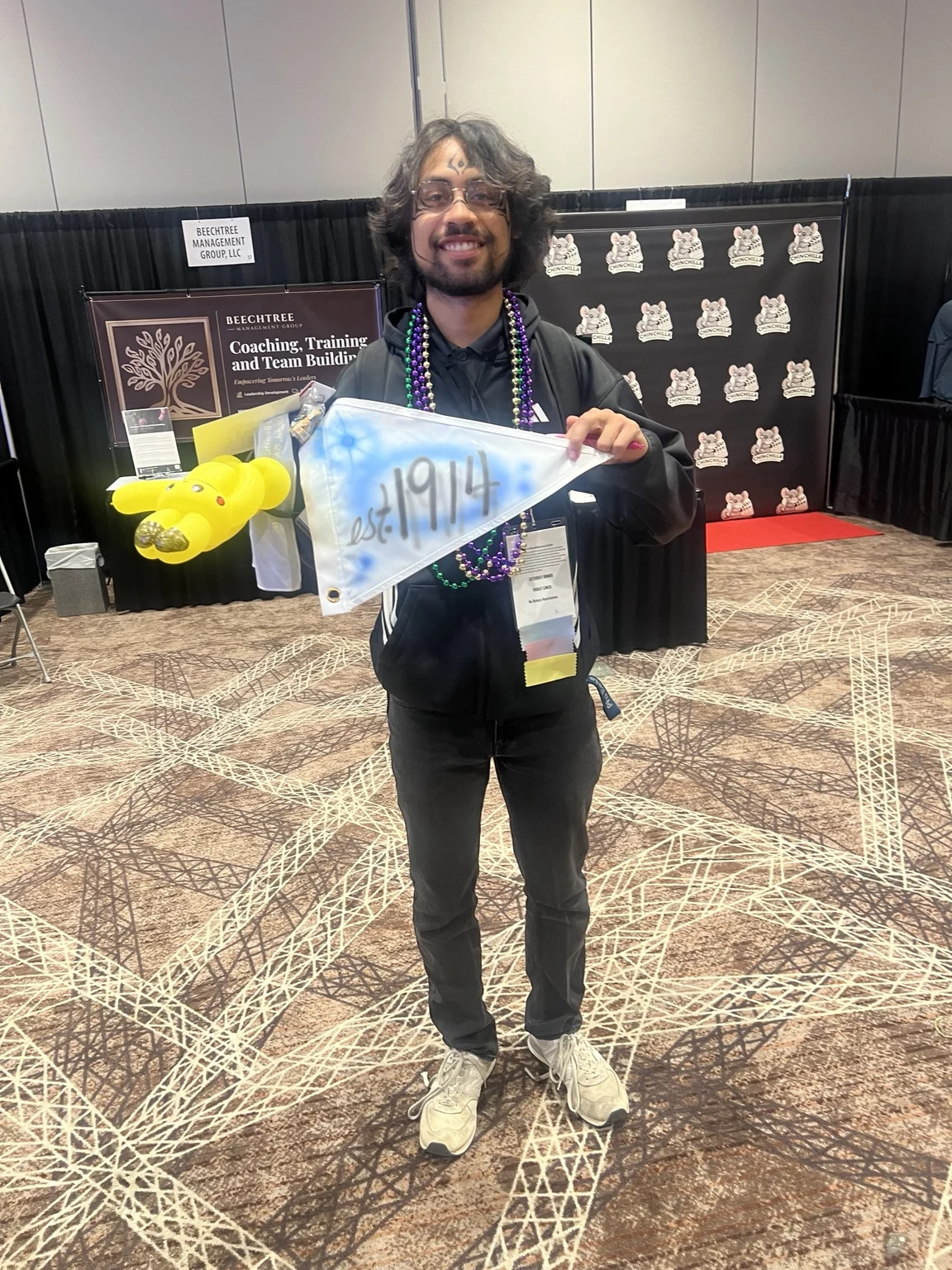
Campus programs can build a menu around school colors, spirit themes, student names and the type of event. 3JS has created custom baseball hats for Penn State Harrisburg, hats and tote bags for the University of Tennessee Knoxville, team pennants for West Virginia University and personalized pennants for Winthrop University.
See the Penn State Harrisburg hat activation, University of Tennessee Knoxville event, West Virginia team pennants and Winthrop University pennants. Planners can also explore college and university airbrush events.
How do companies protect the brand?
Start with written boundaries. Approve the merchandise, logo placement, color palette, design samples, naming rules and any topics that should not be painted. Detailed logos are often applied before the event with an approved production method; the live artist then adds guest-specific lettering and supporting artwork around the brand mark.
If the activation supports a campaign, give the artists a short creative brief and sample pieces. The brand team can approve the visual system before guests arrive. Read how company logos work on custom airbrush hats and learn how a live customization activation is planned.
Can the artist decline a request?
Yes. The event should have a clear policy for inappropriate, unapproved, trademark-sensitive or impractical requests. Artists can redirect the guest to the available menu and suggest an approved alternative. Posting the menu and content rules makes those conversations easier for the guest, the artist and the planner.
Do more choices reduce production capacity?
They can. More time spent explaining options, revising ideas or painting intricate artwork means fewer finished pieces. For streamlined designs, 3JS uses approximately 25 standard items per artist per hour as an initial planning estimate:
This is a planning estimate, not a guarantee. Product type, design complexity, guest decisions, operating conditions and pauses can change actual output.
If the guest count matters more than artistic complexity, reduce the number of designs and cap the amount of lettering. If a highly custom experience is the priority, allow more time per person, add artists or accept a lower item count. Use the artist staffing guide and the guide to airbrush hat production time.
How should the ordering station work?
- Show the options early: place samples or a menu where guests can review choices before the front of the line.
- Record the order clearly: confirm spelling, colors, design number and product.
- Separate ordering from painting: when space allows, keep decision-making from blocking the artists.
- Mark the item: use an order number or guest identifier that follows the product.
- Create a protected pickup area: keep completed work organized and allow paint to settle before handoff.
- Set a final-order time: stop accepting new pieces while the team still has enough time to finish the queue.
For more detail, see how to keep live airbrush event lines moving and the event setup checklist.
Design-menu checklist for planners
- Confirm the product and the usable paint area.
- Choose the number of core designs and color options.
- Decide whether names, initials or short phrases are allowed.
- Set spelling, character and content rules.
- Approve logos, samples and placement before the event.
- Estimate demand and match the artist team to the service window.
- Prepare visible samples, ordering instructions and a pickup process.
- Keep one approved fallback choice for guests who are undecided.
Browse past corporate and university work, then share your crowd size, event goal, merchandise and brand requirements through the event quote form.
Frequently asked questions
Can guests choose their own airbrush designs?
Yes. Most events give guests a curated menu of approved designs, colors and lettering options, then let each person add a name or other permitted personalization.
Can a guest request any design?
That depends on the event. Corporate, university and high-volume programs usually limit requests to approved, appropriate designs that fit the brand, product and available painting time.
Do more design choices slow down the line?
They can. A visible menu with a manageable number of choices helps guests decide before ordering and lets artists repeat an efficient set of designs.
Can guests add their names?
Yes. Names, initials and short words are popular choices. The planner can set character, placement and content rules in advance.
How many designs should an event offer?
For a busy event, 6 to 12 core choices is often a practical starting point. The best number depends on the crowd, service time, artist count, merchandise and complexity.