An airbrush station can give a campus festival, corporate picnic or game-day fan zone a useful giveaway and an activity guests can watch. The planning question is not just whether an artist can paint outside: it is whether the whole station can operate comfortably through the event.
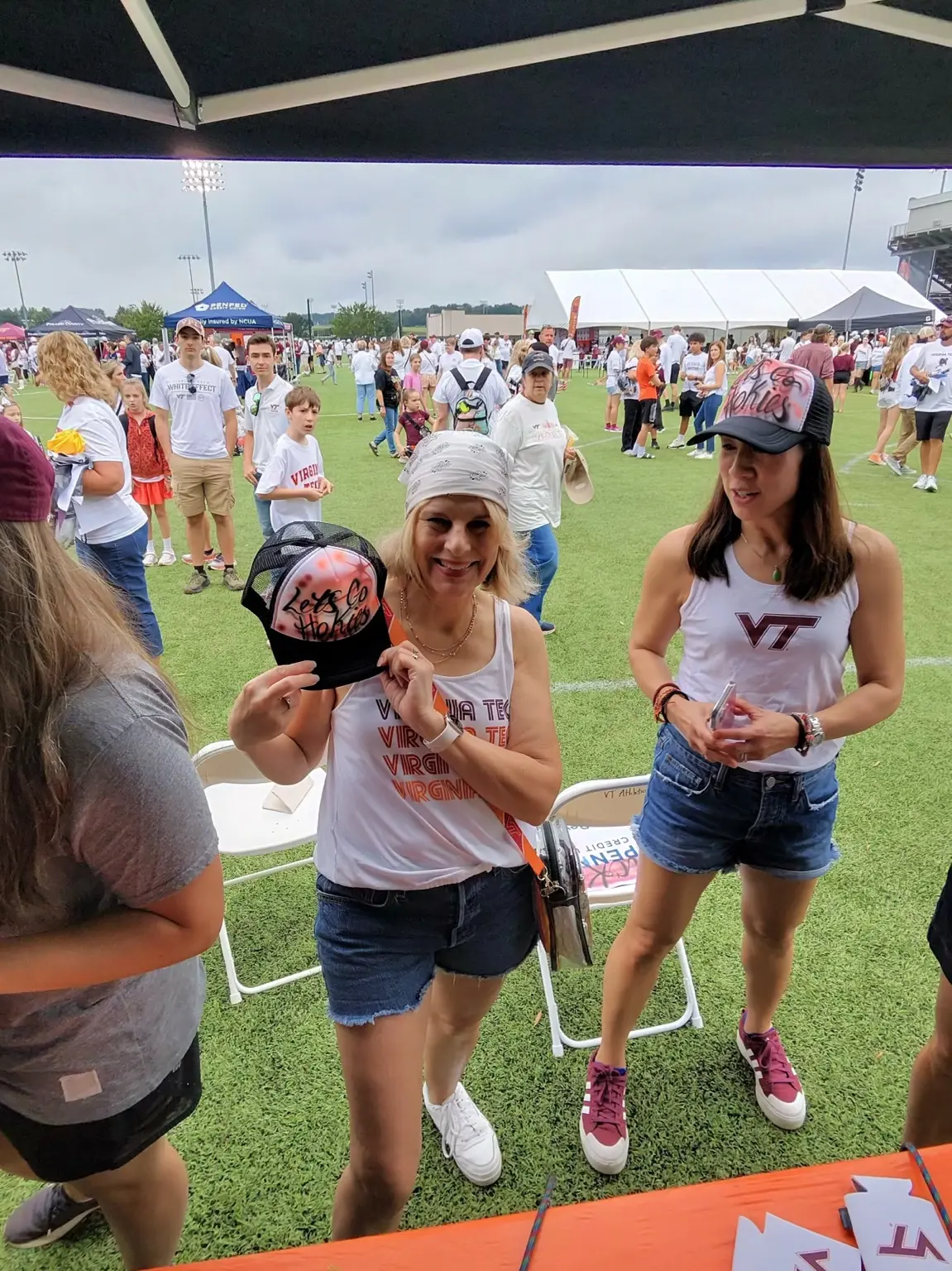
3JS Airbrushing’s six-artist Virginia Tech Hokie Village activation is a real example of personalized merchandise in a busy outdoor campus setting. Guests received custom hats, apparel and other keepsakes. The photo above shows why a covered station and an organized handoff area matter.
Where should an outdoor airbrush station go?
Choose a level location close to the guest activity but outside main walking routes and emergency access lanes. Allow room for the artists’ tables, compressors, merchandise, an ordering point and completed-item pickup. Grass can work if it is firm and level; wet ground, slopes and areas where water collects make a poor setup.
For a corporate picnic, place the station where guests can find it between activities. For a college event, plan around the arrival surge. At a game-day event, consider how the crowd will change shortly before kickoff. Keep the queue away from concessions, entrances and other vendors.
Do you need a tent or canopy?
Plan a canopy, permanent roof or another venue-approved covered work area. Shade protects artists and merchandise from direct sun, while cover helps keep supplies dry. A small umbrella rarely covers several tables and a pickup area adequately.
Confirm who supplies the shelter, who installs and secures it, and whether the venue requires specific anchoring, permits or documentation. Follow the shelter manufacturer’s limits and venue rules. Do not assume a single canopy can accommodate every multi-artist team; share the artist count and a site plan so the footprint can be agreed in advance.
How do wind, heat and rain affect the experience?
| Condition | Planning response |
|---|---|
| Direct sun and heat | Provide shade, drinking water access and a location where the team and waiting guests can stay comfortable. |
| Wind | Keep blanks, forms and finished pieces secured; assess the station and shelter limits with the venue. |
| Rain or wet ground | Keep equipment and merchandise dry. Have an approved relocation or pause plan. |
| Evening darkness | Arrange task lighting and include its electrical load in the power plan. |
| Thunderstorms | Stop outdoor activity and move people to safe shelter under the venue’s emergency plan. |
Sidewalls may help in some settings, but should be approved as part of the shelter plan rather than added casually when wind picks up. They also change airflow and access. Discuss conditions with the event team instead of treating “rain or shine” as a promise to continue in unsafe weather.
The National Weather Service advises moving to a safe building or enclosed metal-topped vehicle when thunder is heard, and waiting at least 30 minutes after the last thunder before resuming outdoor activity. Tents and picnic shelters do not provide lightning protection.
What power does the station need outside?
Tell the venue the number of compressors and any lights or other equipment. Confirm the available circuits, distance from the outlets, cable routing and outdoor electrical protection with the venue’s electrical provider. An outlet strip creates more plug positions; it does not create more circuit capacity.
If a generator is needed, agree on who provides it and size it for the running load plus compressor motor starts. A generator’s advertised maximum output is different from its continuous output. Several motors can restart at the same time even if they were initially switched on one at a time. Test the complete setup before the event rather than judging capacity from tank size alone.
Generators must be operated outdoors according to their instructions and venue requirements, with exhaust directed away from people. The CDC recommends at least 20 feet of separation from doors, windows and vents. Do not place a generator inside an enclosed tent or relocate it to an enclosed space to escape rain.
See the full airbrush station setup checklist for tables, chairs, power and load-in planning.
Keep merchandise and finished artwork protected
Store unused products in covered containers off wet ground. Separate blanks from completed items, and reserve a sheltered pickup area so fresh artwork is not immediately exposed to rain or stacked against another painted surface.
Adjustable trucker hats are a practical option when you want to avoid shirt-size decisions. Canvas bags offer a larger design area and easy distribution. Compare event product options, then confirm the actual blanks and design menu with the artists.
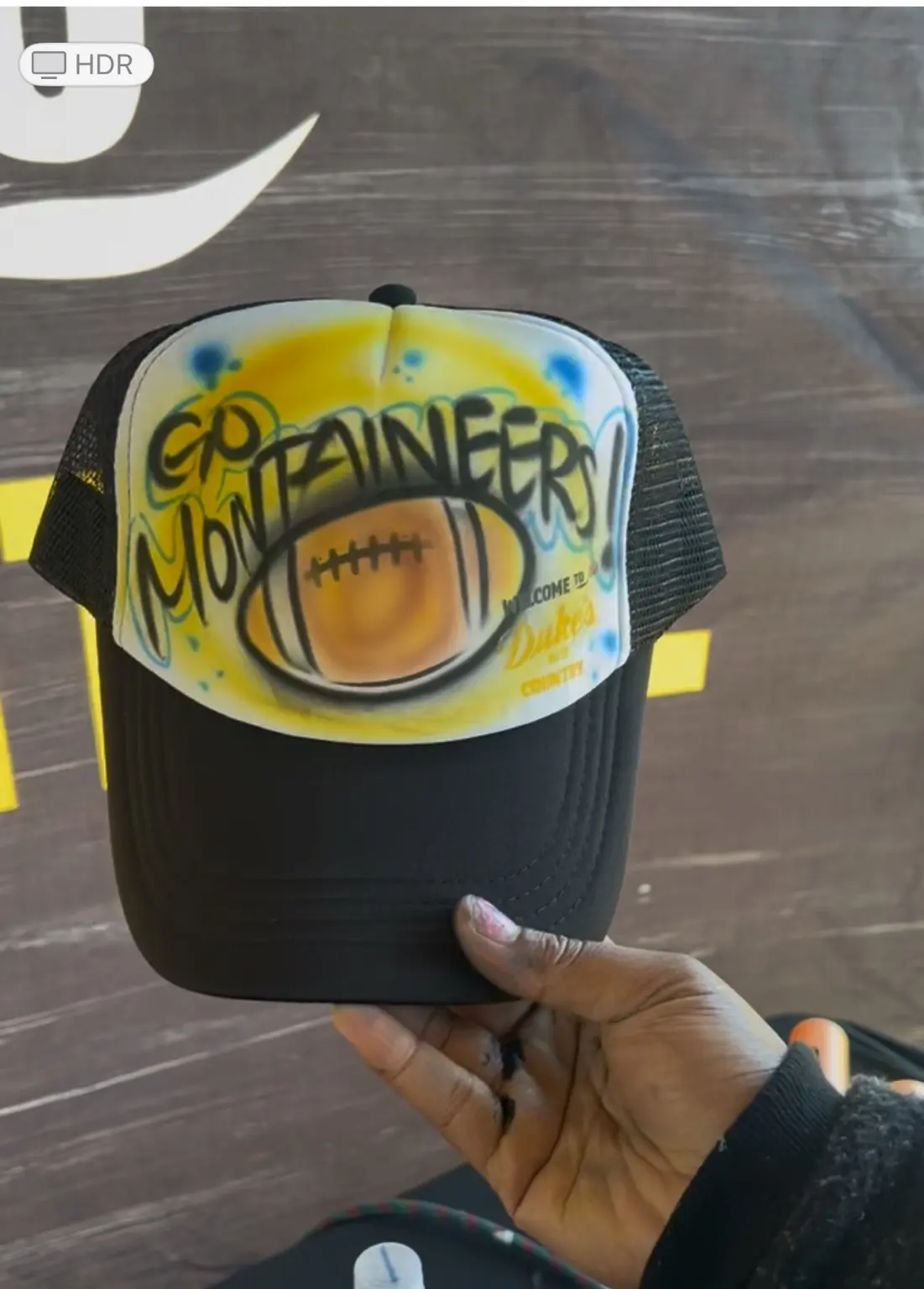
The West Virginia football event illustrates how colors and a focused design can connect merchandise to the occasion. Select a manageable menu before the event so guests can decide quickly.
Plan for the busiest part of the event
Use approximately 25 standard items per hour per artist as an initial planning estimate, subject to design complexity and conditions. Four artists over three hours could produce about 300 standard items if the full painting window is available. If a weather pause removes 30 minutes, the same estimate becomes about 250 items. This is a planning example, not a guaranteed output.
Build the schedule around usable painting time, not the overall festival duration. Separate ordering from pickup, set a clear final-order time, and communicate changes if weather shortens the window. See ways to keep guest lines moving and how to estimate artist staffing.
Agree on the weather backup before booking
- Name the person who can pause, relocate or cancel the station.
- Identify a backup space and confirm its power, tables and guest access.
- Decide when the weather decision will be made and how artists will receive it.
- Allow time to move equipment; relocation is not instantaneous.
- Put cancellation, postponement, overtime and unused-merchandise terms in the written agreement.
For an outdoor wedding, a covered reception space may offer a simpler backup than an exposed lawn. For a university event, confirm whether a nearby building is actually available during the service window. For a corporate activation, keep the guest experience and brand signage consistent in both locations.
What to include in your outdoor-event quote request
Send the date, city, venue, expected participation, painting hours, preferred products and whether the client supplies merchandise. Add photos or a site plan, the proposed shelter, the power source, surface type, load-in route and backup location.
Explore corporate activation services, college and university events or wedding favors, browse real past work, and share your plan through the event quote form.
Frequently asked questions
Can live airbrush artists work outside?
Yes, with a sheltered, stable work area, suitable power, protected merchandise and a weather backup plan. Confirm the location and conditions with the artist team before booking.
Does an outdoor airbrush station need a tent?
Plan a canopy or another approved covered work area for shade and weather protection. Confirm who supplies and secures it, its size and the venue requirements. A tent is not safe shelter from lightning.
Can you use a generator for airbrush compressors?
A suitable generator can power an outdoor station when approved by the venue. Size it for all running equipment and motor starting loads, follow the manufacturer instructions, and keep exhaust away from people and building openings.
What happens if it rains during the event?
The team and organizer should follow the agreed weather plan: protect merchandise and equipment, pause when conditions are unsafe, and relocate when a suitable backup space is available. Cancellation and rescheduling terms should be written into the agreement.