
Event planners often ask whether guests can wear a custom hat immediately or whether freshly painted shirts and bags need a separate drying area. In most live airbrush programs, the item can move to pickup soon after painting, but the safest process depends on the merchandise, design and conditions.
Airbrush artists apply paint in fine layers. Those layers can become dry to the touch relatively quickly. A heavy design, cool or humid air, limited ventilation or absorbent material may need more time. The artist should make the final handoff decision at the event.
Dry to the touch and fully cured are different
Dry to the touch means the surface can usually be handled carefully without obvious smearing or transfer. Cured means the coating has completed the longer process needed for maximum durability. An item may be ready to wear before it is ready for washing, folding tightly or rough use.
That distinction matters when communicating with guests. “Ready for pickup” should mean ready for careful handling, not permission to test the design by rubbing it or putting it through the wash that night.
What affects drying time?
| Factor | Why it matters | Planning response |
|---|---|---|
| Paint thickness | Large fills and repeated layers hold more moisture than light lettering | Allow extra pickup time for detailed designs |
| Merchandise | Hat panels, shirts, canvas bags and synthetic fabrics behave differently | Test the exact item before the event |
| Temperature and humidity | Cool or humid conditions can slow surface drying | Protect the station and expand the drying area |
| Airflow | Moving air supports evaporation; stagnant areas can slow it | Use an open, ventilated pickup setup without exposing work to dust or rain |
| Stacking or folding | Fresh painted areas may touch another surface | Keep designs exposed until approved for handoff |
Can guests wear an airbrushed hat right away?
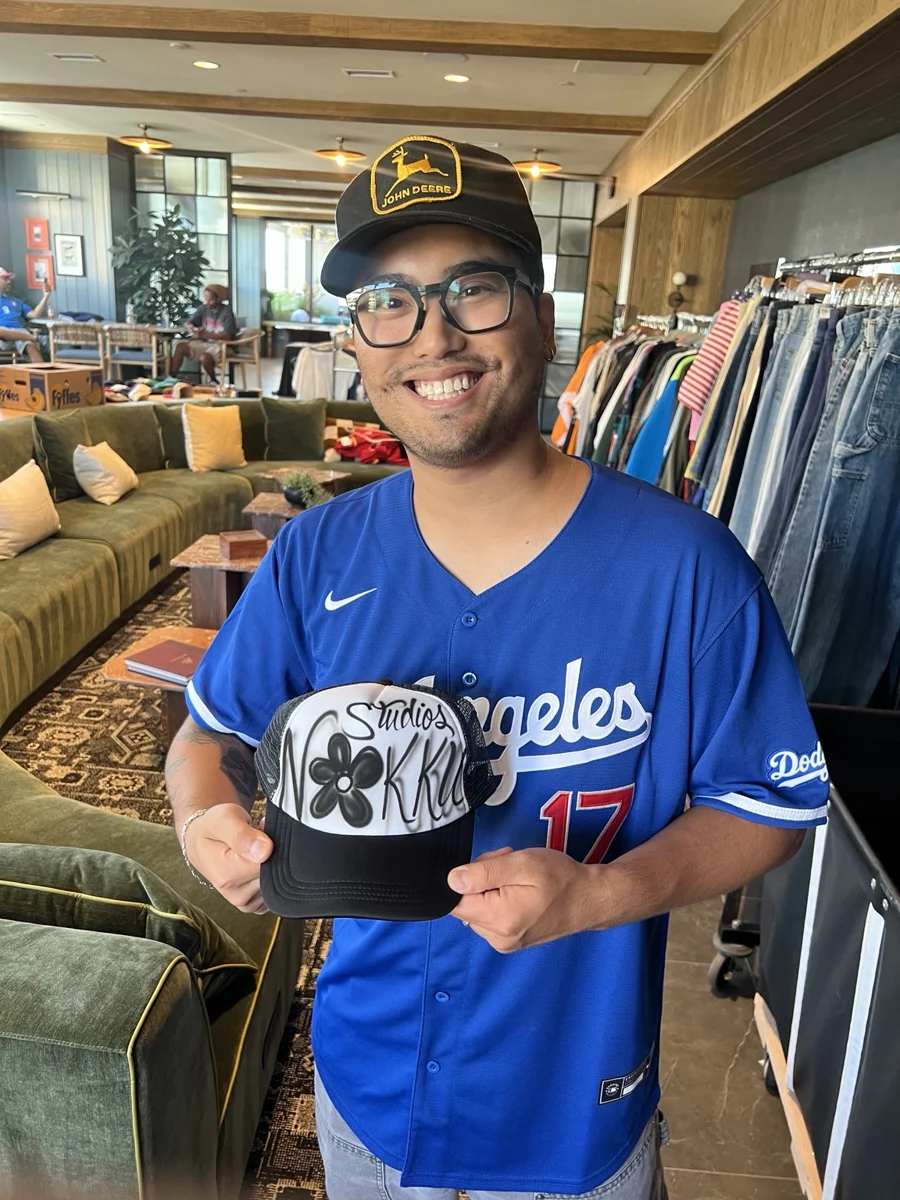
Often, yes—after the artist or pickup attendant confirms that the painted panel is ready. Hats are convenient for live events because the design stays on a structured, visible surface instead of folding onto itself. Guests should handle the brim or unpainted areas and avoid rubbing, crushing or getting the design wet.
At the Virginia Beach graduation party shown above, guests wore their personalized trucker hats during the celebration. At corporate and college events, guests also commonly pose with finished hats after they pass through the pickup step.
Explore custom airbrush trucker hats for events and compare the best hat styles for live airbrushing.

What about shirts, hoodies and tote bags?
Soft goods need thoughtful staging because fabric can fold and place the painted surface against itself. Lay a shirt or tote flat with the design facing up, or hang it so the painted area remains exposed. Do not pile completed items together while they are still in the initial drying period.
If guests need to carry the item around the venue, plan a handoff method that keeps the design open and protected. The event team may use hangers, flat tables, numbered racks or another system suited to the product. Review the event product options before choosing the pickup setup.
Should a fresh item go into a plastic bag?
Not immediately unless the artist confirms it is ready. A plastic bag can touch the painted surface and may trap moisture. For the initial drying period, open-air staging is generally safer. If packaging is necessary, build enough time into the workflow and choose packaging that does not press against the design.
Carry the item by an unpainted area, keep the design exposed, do not rub it and keep it away from water until the artist's care instructions allow normal use.
How should the pickup area be organized?
- Create a separate finish zone: move completed items away from active painting tables.
- Keep designs visible: use flat tables, racks or hangers that prevent contact with the painted surface.
- Use order numbers: match each item to the correct guest without unnecessary handling.
- Assign a pickup attendant: during a busy activation, one person can organize items and explain care.
- Protect the area: keep drinks, food, rain, dust and crowd traffic away from fresh work.
- Give short care instructions: tell guests how to carry the item and when normal wear or washing is appropriate.
A properly organized drying and pickup zone also helps keep the event line moving. The ordering line should not stop while finished merchandise waits for handoff.
Does drying time change production capacity?
It should not become the main bottleneck when the station is planned correctly. Artists can keep painting while finished items move to a separate drying and pickup area. The amount of open table or rack space should match the number of artists and the expected production rate.
For streamlined designs, 3JS uses approximately 25 standard items per artist per hour as an initial planning estimate. That figure covers painting capacity; it does not mean every item should be immediately stacked or packaged. Use the artist staffing guide and the setup checklist to plan the complete station.
What changes at an outdoor event?
Outdoor conditions can add humidity, wind, dust, direct sun and sudden rain. Place both the artists and finished-item area under appropriate cover. Secure lightweight merchandise and signs, keep moisture away from the work and maintain a weather backup plan. Read the guide to live airbrushing at outdoor events.
What should guests know about care afterward?
Follow the artist's product-specific directions. In general, avoid rubbing the fresh design, exposing it to water or folding the painted surface against itself during the initial period. Washing and long-term care depend on the item, paint system and any finishing process used at the event.
For a deeper explanation, read how long airbrushed hats and shirts last. To see finished work in real event settings, browse past corporate, university and private events.
Drying and pickup checklist for planners
- Test the exact merchandise and approved designs before event day.
- Reserve open table, rack or hanging space beside the artist station.
- Keep fresh designs from touching bags, tables, other items or guests.
- Use order numbers or names that are easy to read without handling the artwork.
- Assign pickup support for high-volume events.
- Prepare short handling and care instructions.
- Add covered drying space and a weather plan for outdoor programs.
Share your event date, city, service time, estimated guest count and preferred merchandise through the event quote form. The 3JS team can recommend an artist count, station footprint and pickup plan.
Frequently asked questions
How long does airbrush paint take to dry at an event?
Thin layers are usually dry enough for a controlled handoff within a few minutes, but paint, material, design, airflow, temperature and humidity affect the exact time. Full curing takes longer.
Can guests wear an airbrushed hat right away?
Often, yes, after the artist or pickup attendant confirms that the painted surface is ready. Guests should avoid rubbing, stacking, crushing or getting the fresh design wet.
Should fresh merchandise be placed in a plastic bag?
Not immediately unless the artist confirms it is ready. A bag can touch the painted surface, trap moisture or cause transfer.
Do shirts and tote bags need more drying space?
They often do because the fabric can fold onto itself. Lay the item flat or hang it with the design exposed until it is ready for handoff.
Does humid weather slow drying?
It can. Cool temperatures, humidity and limited airflow may extend drying time, so outdoor events need covered workspace, protected pickup and a weather plan.