Yes—one live airbrush event can offer hats, shirts, canvas bags or other approved items. The advantage is guest choice. The tradeoff is a more complicated inventory and production plan.
Before the event, decide how many of each product will be available, whether guests receive one item total, how sizes are managed and whether artists share every product or work in assigned lanes. A clear menu protects the experience when one option becomes more popular than expected.
What do real mixed-product events look like?
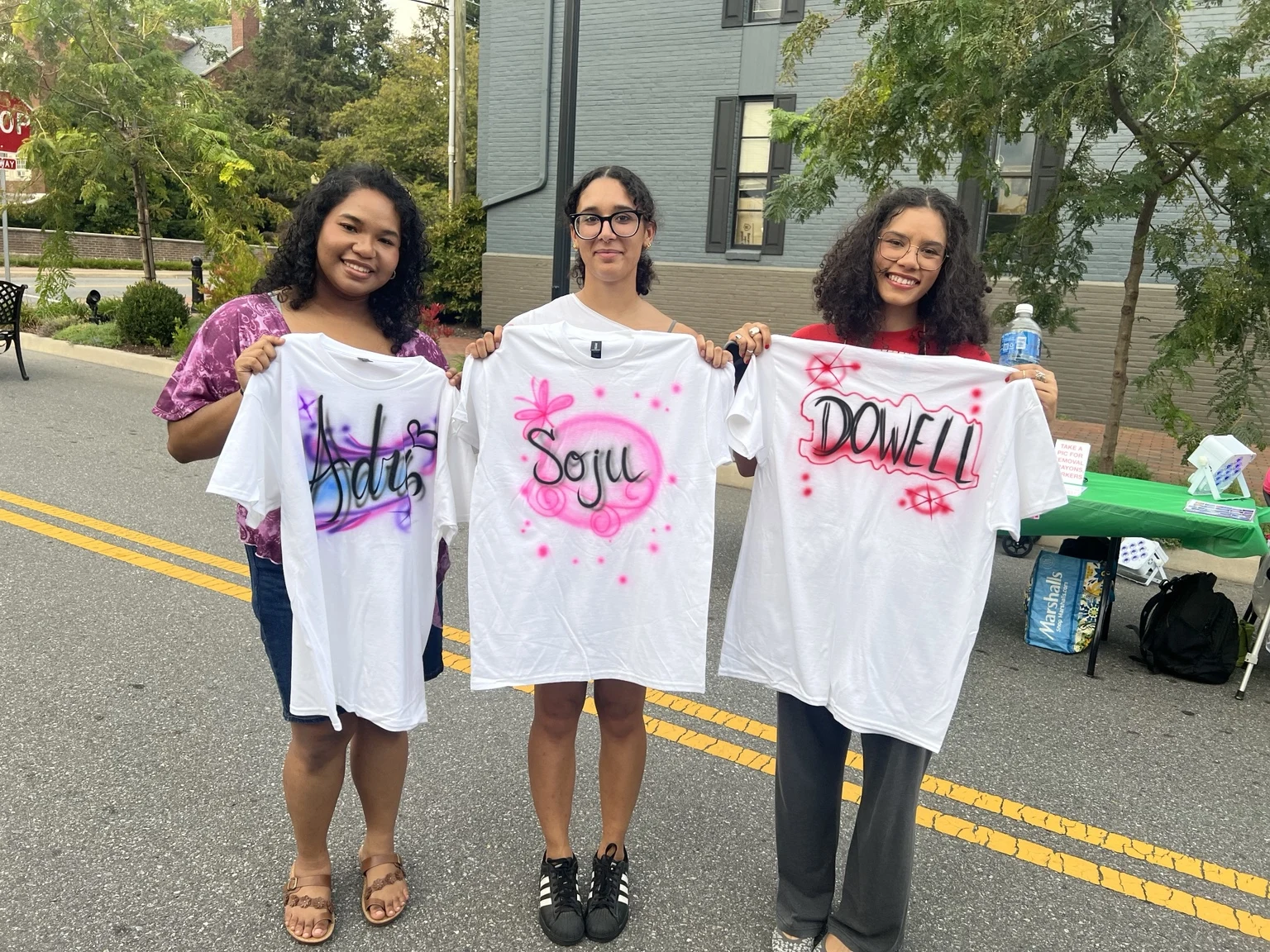
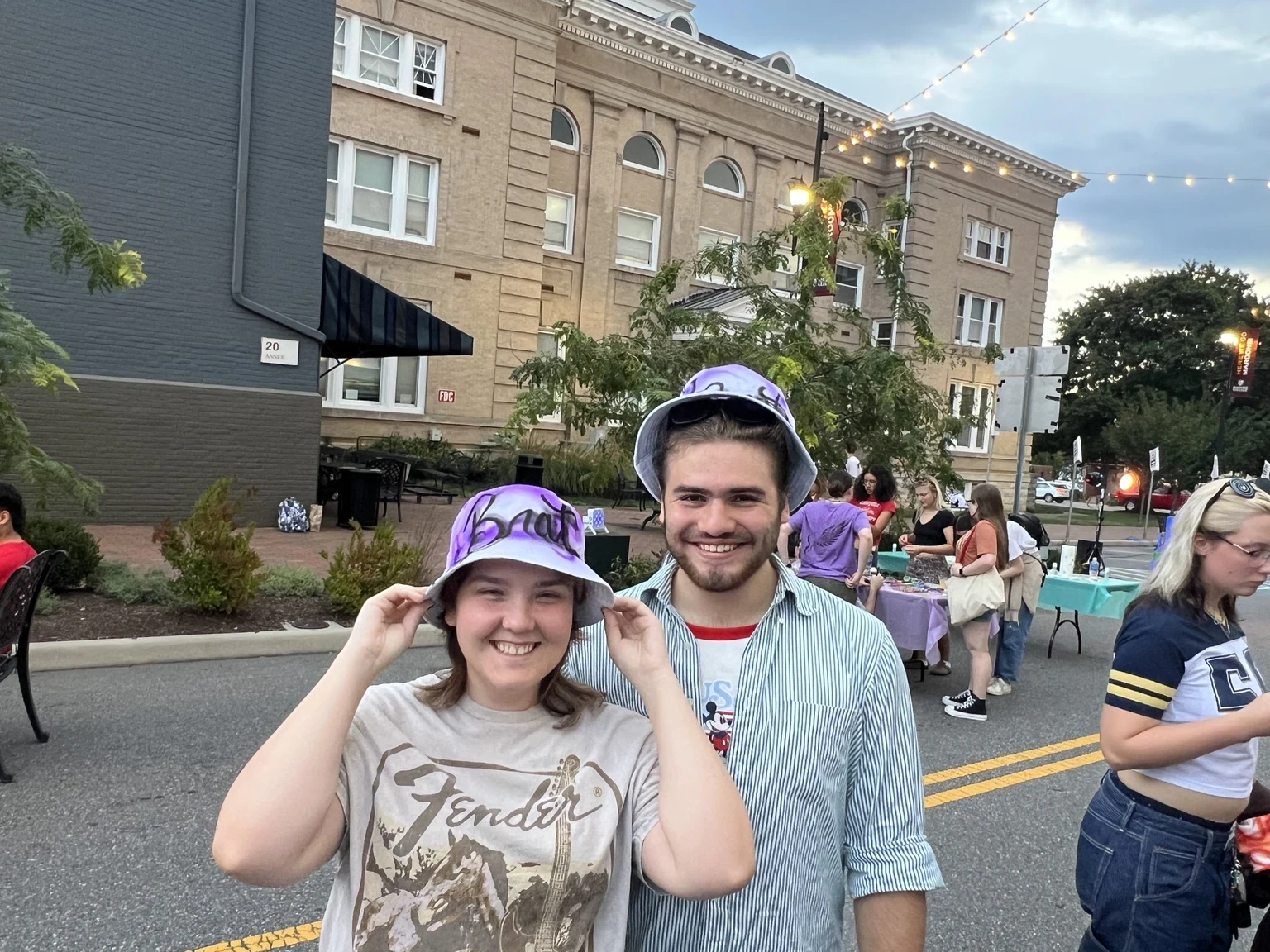
At Roanoke College’s Fall Festival in Salem, Virginia, 3JS personalized shirts, trucker hats and bucket hats. The event photos show students holding finished shirts and wearing custom hats in the same outdoor celebration.
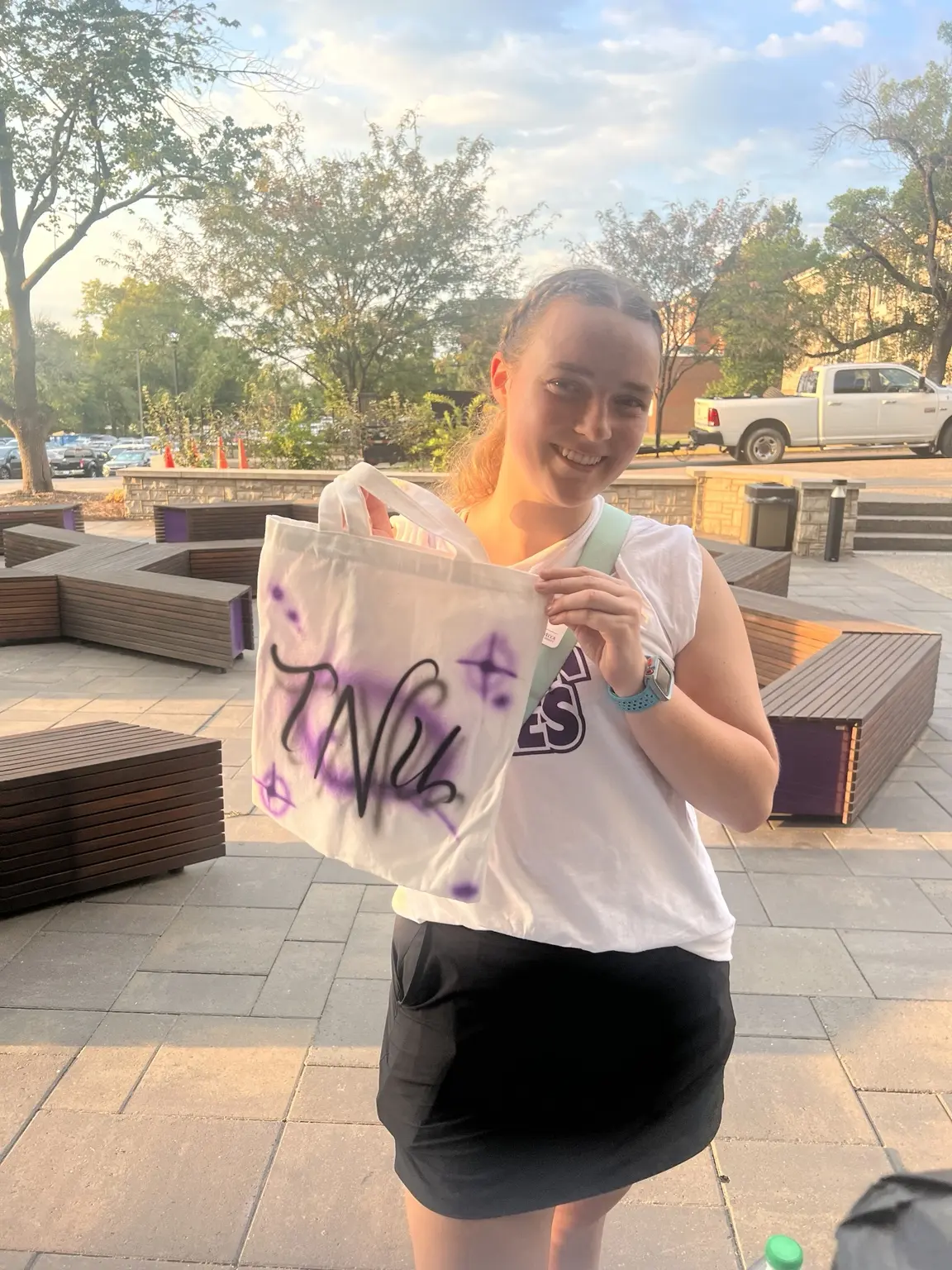
At Trevecca Nazarene University’s New Student Street Fair in Nashville, four 3JS artists personalized bucket hats and canvas bags. That combination avoided apparel sizes while still giving students a wearable choice and a practical carry item.
These examples show the products used and the guest experience. The inventory examples below are illustrative planning scenarios, not reported product counts from those events.
1. Decide what “choice” means
Write the offer in one sentence. For example: “Each eligible guest may choose one trucker hat, one T-shirt or one canvas bag while supplies last.” That sentence establishes the per-person limit and prevents the total item target from quietly becoming two or three items per guest.
Decide whether a guest may change products after an order is submitted, whether a missing shirt size can be replaced by a hat or bag, and who approves exceptions. Put the final choices on a visible menu before the ordering point.
2. Allocate inventory by product and size
Do not arrive with one combined total and hope the mix works. Assign a quantity to every product, and track apparel sizes separately. Audience information, registration data and prior event experience are more useful than guessing an equal split.
| Illustrative 200-item mix | Quantity | Inventory detail | Fallback question |
|---|---|---|---|
| Trucker hats | 80 | Count by color if guests choose colors | Can a guest choose a bag when hats run out? |
| T-shirts | 70 | Count every size separately | What substitute is offered if a size is gone? |
| Canvas bags | 50 | Confirm dimensions and fabric | Can reserved bags be released later? |
| Total | 200 | One item per eligible guest | Who authorizes inventory changes? |
The 80/70/50 split is only an example. It is not a recommended universal ratio. Choose quantities around your audience and keep a live count so the menu changes as soon as an option is no longer available.
3. Test each exact blank before ordering
A design that reads clearly on a smooth foam trucker-hat front may need a different scale or placement on a shirt or canvas bag. Test color contrast, seams, surface texture, stretch and handling on the exact item—not only a similar product.
If the host supplies the blanks, send the product link, color and material early. Confirm whether 3JS or the host purchases replacements for unusable items. Browse event product options, the product comparison guide and client-supplied merchandise guidance.
4. Calculate capacity using the product mix
Approximately 25 standard items per artist per productive painting hour is a starting estimate for streamlined designs. Multiple products can change the pace because artists adjust placement, secure different blanks and organize more finished-item types.
3 artists × 3 productive hours × approximately 25 standard items = approximately 225 items before allowing for complexity or interruptions.
A 200-item target fits below that basic estimate, but it is not automatically guaranteed. Confirm the exact hats, shirts, bags and artwork with the artist lead. If the tested mix takes longer, change the target, time, staffing or menu.
Do not calculate from the fastest product and apply that rate to everything. Use the artist staffing guide and hat timing guide as starting points, then review the whole menu.
5. Choose between shared and dedicated stations
In a shared system, each artist may receive different products. That offers flexibility but creates more switching. In a dedicated system, one station might handle hats while another handles shirts and bags. That can simplify setup, but a popular product may build a longer line.
The right plan depends on artist skills, expected product demand and space. Another option is one ordering line with staff routing each ticket to the appropriate station. Display samples before guests choose so artists spend less time explaining the menu.
6. Write orders so products cannot be confused
Record the guest name, spelling, product, product color, shirt size where relevant, approved design and order number. Use a separate identifier for similarly named guests. The finished-item area should keep folded apparel, structured hats and flat bags organized without fresh paint touching another surface.
Explain whether guests wait, return or receive a notification from the host’s approved system. Read the guest ordering guide, queue guide and drying and handling guidance.
7. Plan what happens when a choice runs out
The ordering team should know the substitution rule before doors open. Options might include another product, another color or closing that part of the menu. Never promise that more stock is coming unless delivery and timing are confirmed.
Protect any inventory reserved for a later session or event day. If the host wants the option to release it early, identify the person with approval authority and the count that triggers the decision.
What should you include in the quote request?
- Date, venue, city, time zone and painting window
- Total eligible guests and one-item-per-person policy
- Products, quantities, colors and every apparel size
- Who supplies the blanks and when samples can be tested
- Approved designs, personalization limits and brand artwork
- Expected demand by product and substitution rules
- Ordering, painting and pickup space plus a day-of contact
Explore college event services, corporate activations, past event galleries and hats versus tote bags. Then share the full product mix through the event quote form.
Frequently asked questions
Can guests choose between a hat, shirt or bag?
Yes, when the products have been tested and the event plan defines the available choices, inventory and one-item-per-person rule. Display the options before ordering and explain when a product or size is unavailable.
Does offering more products slow down live airbrushing?
It can. Different surfaces may require different setup, handling and design adjustments. Base capacity on the planned product mix and approved artwork rather than assuming every item takes the same amount of time.
How should shirt sizes be ordered for an event?
Use audience information or registration data when available, keep each size counted separately and agree on substitutions. Do not promise every size without enough evidence and inventory to support that promise.
Should every artist paint every product?
Not always. Assigning products or designs to specific stations can reduce switching and simplify pickup. The best arrangement depends on the artists, products, design menu and event layout.
What happens when one product runs out?
The ordering team should stop offering it immediately and explain the approved alternatives. Keep an accurate live count and never substitute another product without the host’s agreement.